
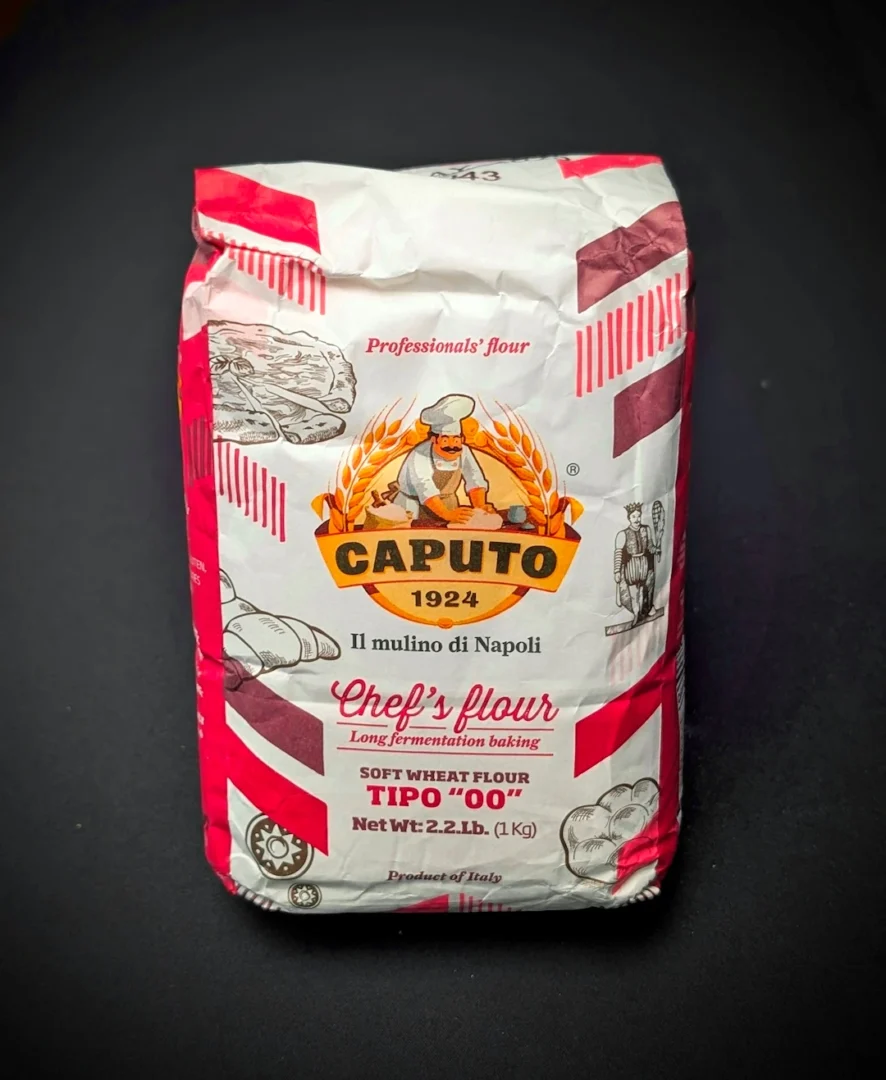
Many of the wood-fired pizzerias that I’ve visited recently proudly feature Caputo Pizzeria flour. While I’ve had great luck with this at home too, I have found it doesn’t hold up super well when proofed for long periods. So, I’ve been excited to try long fermentation pizza with Caputo Chef’s flour – and I’ve not been disappointed!
I think once you get your first home pizza oven that can reach 900 degrees Fahrenheit, it won’t be long before you start looking for an Italian 00 pizza flour to craft Neapolitan pizzas. Antimo Caputo Pizzeria Flour is a must-try for Neapolitan pizzas – and readily available on Amazon.
And while the Pizzeria variety is perfect for Neapolitan, I have found myself wanting more flavor in the crust that requires a longer fermentation.
But this has come at the price of a dough that I’ve found quite challenging to work with. An Associazione Verace Pizza Napoletana (AVPN) Neapolitan recipe allows for up to 24 hours of counter-top, room temperature fermentation. And with some doughs, this will work great (Polselli is my favorite for this – especially if mixed by hand).
Red vs. Blue* – what do you do?
Still, I was sure that Caputo had a flour that could make the pizza I was looking for too. And, after a bit of experimentation, I’ve come to love Caputo Chef’s Flour pizza due to its perfect qualities for long fermentation! This flour has been curated from a variety of wheats to make doughs that require extended proofing times, making it perfect for achieving complex flavors and textures in your pizza crust. With a higher protein content of 13.50% and strong, elastic gluten, Caputo Chef’s Flour is an excellent choice for home chefs looking to elevate their pizza-making skills with traditional (softer) Italian flour!
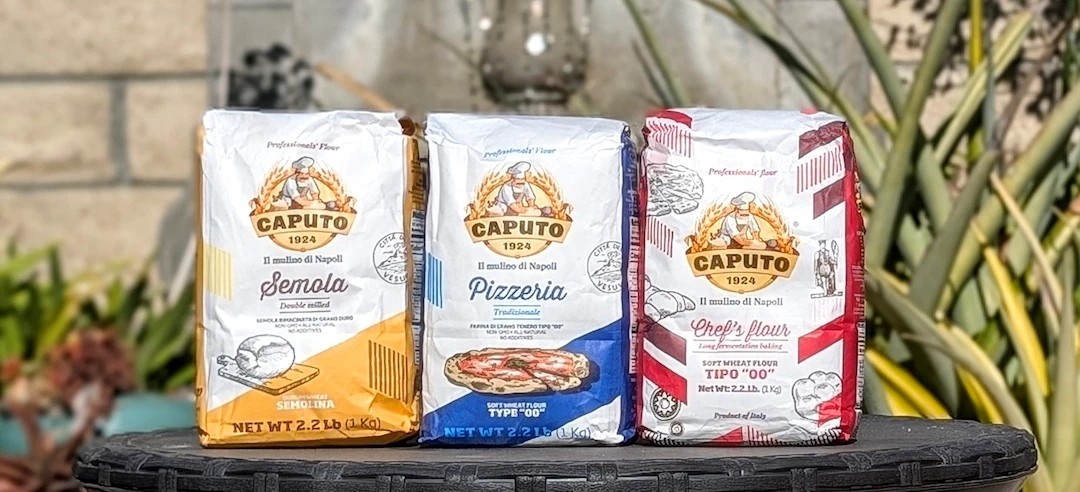
* Note there are variations on the packaging largely due to commercial use, so don’t rely completely on the color of the packaging!
The Difference Between Italian and American Wheat Flours
One of the most significant discoveries I made was the difference between Italian wheat flour and American wheat flour. Italian flour, (such as Caputo’s), is typically made from softer wheat varieties. This gives it a lower protein content and makes it perfect for creating that light, tender pizza crust.
In contrast, American wheat flour is derived from harder wheat varieties, resulting in a higher protein content. While this makes American flour great for bread, many American varieties result in a denser, less airy pizza crust.
Remind what Type 00 means?
When making pizza, you’ll quite frequently see the “Type 00” associated with flour – especially flour designed for Neapolitan (but also New York). Type 00 (which in Italian is pronounced doppio zero) refers to the milling specification – the flour is ground to an extremely fine level, much like baby powder in terms of consistency.
While it is often associated with Italian pizza flour it is really not very useful in understanding that flour’s best application since it doesn’t describe the wheat type (e.g. soft vs. hard), protein content, or W Index – which are all far more critical aspects of a flour when choosing it for pizza.
Caputo’s is a Family Tradition Rooted in Naples

Since its founding in 1924, the Caputo family has upheld the ancient Neapolitan art of milling. Their dedication to quality and tradition spans three generations, with each member contributing to the company’s growth and success. From its humble beginnings in Capua to becoming the gold standard for Neapolitan pizzaioli, the Caputo legacy is one of resilience, innovation, and passion.
The Caputo Legacy: A Flourishing Family Tradition
The Caputo family’s journey began in 1924 when brothers Carmine and Pasquale Caputo returned to their hometown, Capua, Italy, after working in the United States. They founded the Caputo Mill and pasta factory, laying the foundation for what would become a flour empire.
After Carmine’s passing, his son Antimo took over at the young age of 21, steering the company through significant growth. Moving operations closer to Naples, Antimo strategically positioned the mill in San Giovanni a Teduccio, leveraging its proximity to the port for wheat imports.
Under the management of Antimo and his wife Maddalena, the mill flourished, focusing solely on flour production. Despite a devastating fire in the late ’70s, the family’s resilience saw the mill rebuilt and expanded. Today, Antimo and Maddalena’s sons, Carmine and Eugenio, continue to run the company with their own sons, ensuring the Caputo legacy thrives.
Expanding from Naples to the World
Caputo’s reputation as a “flour boutique” quickly spread beyond Campania, making waves in the global foodservice industry. The American adventure began in the ’90s when a prominent New York restaurateur discovered the flour in Naples and introduced it to the US market.
With Antimo and Eugenio’s sons joining the company, Caputo continued to innovate and expand. In 2009, they launched their award-winning Gluten Free Flour, Fioreglut, maintaining their commitment to natural ingredients without compromising on flavor or texture.
What Makes Caputo Flour Different?

You don’t actually need to travel to Naples to experience true Neapolitan pizza. Thankfully, you can get lovely Italian flours imported into the US. With quality Italian choices like Caputo flour, you can achieve that coveted balance of chewiness and crispiness right in your own kitchen.
The unique blend of up to eight different wheat varieties in Caputo flour ensures a consistent quality and the ideal properties for each of their dough applications. Blending apparently allows Caputo to maintain their quality standards regardless of varying wheat crop conditions. Their quality experts ensure that each flour maintains optimal protein levels and starch-binding characteristics, influenced by factors like weather, soil, and the harvest.
One tidbit I found interesting in researching this flour is that not all of the wheat that is used for Italian flours is grown in Italy. That’s true of Caputo flours as well as Polselli Classica, another fantastic Italian option, but according to the Caputo website, the entire Grano Nostrum (their soft wheat flour – one of the grains used in Pizzeria) process is certified 100% made in Italy.
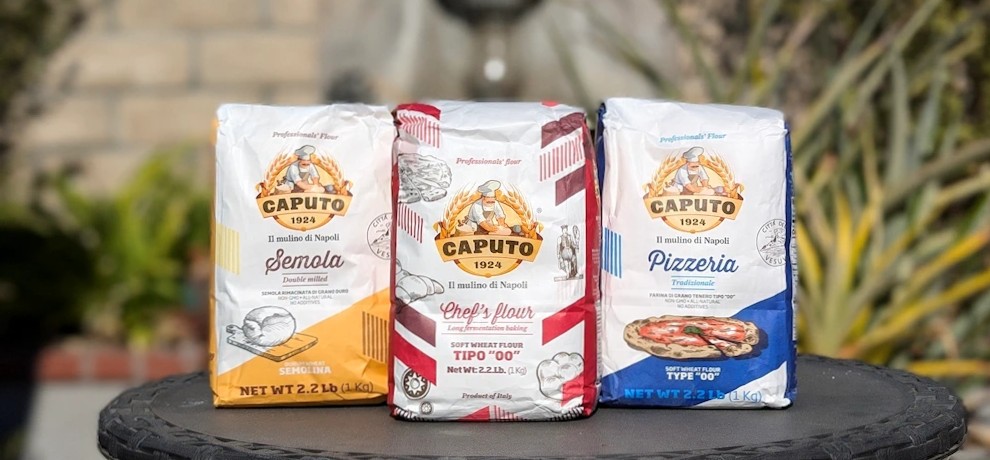
If “Blue” is their Pizzeria Flour, why should I use the “Red” Caputo Chef’s Flour?
Caputo Pizzeria Flour (affectionately called “blue” in the US because of its packaging) stands out with its high-quality protein (12.5%) and elastic, resistant gluten. Unlike flours for you might use for bread or all-purpose applications (even American pizzas). But this flour is crafted specifically to make the light and airy crust made at the highest baking temperatures (over 700°F): which perfect for achieving the quintessential Neapolitan pizza crust in a high-heat pizza oven.
BUT…
Not every pizza is cooked at this temperature (and a lot of people don’t have a high-heat pizza oven).
In which case, the red flour could be the right flour for you!
Long Proofing Times? Use Caputo Red Flour
Long fermentation times are essential for developing rich, complex flavors in pizza dough. And while Pizzeria flour might be perfect for a classic AVPN Neapolitan pizza recipe with a proofing time of say 8-12 hours, I have not had the best luck with it for longer proofing times. After 24 hours at room temperature, I find it has become a too delicate and you need to be pretty practiced to work with it. Beyond 24 hours, I find Caputo Pizzeria flour to be too challenging to be fun to work with.
Enter Caputo Chef’s Flour!
Why Make Pizza with Antimo Caputo Chef’s Flour?
The Red Variety: What’s So Different?
While there are a number of reasons to get into Antimo Caputo Chef’s Flour, for me it was the desire to make a long-proofing time Neapolitan pizza with an Italian flour. I’ve had great success doing this with Central Milling‘s Organic Reinforced 00 flour – but, as discussed above, American and Italian flours are different.
The Caputo Red Flour has two key attributes that make this an excellent choice for longer proofing time:
- High Protein Content: At 13.50%, Caputo Chef’s Flour has a higher protein content than typical all-purpose flours. This provides the necessary strength and elasticity to support extended fermentation times without the dough becoming too slack or difficult to handle.
- Strong, Elastic Gluten: The flour’s gluten structure is both strong and elastic, making it ideal for long-proofed doughs. This elasticity ensures that the dough can stretch and rise properly over extended periods, leading to a light, airy crust with a beautiful texture.
Did Caputo Chef’s Flour work?
I experimented with a few different dough recipes with this flour. From the deep pan styles of Sicilian to thinner Neapolitan styles, this pizza had both great structure and great taste. In particular, I found it worked very well with a sourdough starter (5% by weight) to kick things off.
High Hydration Dough? Use Caputo Red Flour
The same attributes that make Caputo Red Flour excellent for longer proofing times also makes it excellent for high hydration pizza doughs. It’s strong gluten network can absorb and retain more water, resulting in a dough that is easier to work with and bakes into a moist, airy crust that you need for a classic Sicilian or Roman pizza!
In the case of the Sicilian style, I fermented the dough for a very long time. I kicked it off for 1 hour at room temperature then refrigerated it for 3 days then pulled it out in the morning and let it warm up and rise. Honestly, I think I sent it into the fridge too early and not much fermenting happened in terms of puff until it came out (this was actually used for my Tikka Masala pizza, and if you look close, the outer corners were not puffed that great). I continue to experiment but I think I’m most happy with at least 2 hours at room temperature after mixing before moving to the fridge for at least 2 days and then pulling out for about 6 hours to maximize it’s proofing and poofing!

And if you’ve made these styles pizzas, you’ll know that they too have long proofing times (usually 48 hours or longer).
And What About Neapolitan?
My experience with the Neapolitan version was slightly different. My first test was 24 hours at room temperature. The dough came out beautifully, workable, and strong enough to make an excellent Neapolitan. Much beyond 24 hours and the dough again started to tear more easily. From what I can tell, this is simply the effect of softer Italian flour compared to harder American flour.
But Caputo Chef’s flour certainly did well with a cold ferment in the middle – 2 or 3 days in the fridge between the first and final proofing worked great.
That being said, ferment it too long and (like pretty much any flour), the flour becomes too broken down to retain it’s structure for shaping, launching, and recovering.
Yes, Yes, But how does it taste??
Well, you can surely guess that I didn’t write this article to tell you it was terrible!
In fact, it was sublime! The longer proofing times really did an excellent job allowing the flavor to fully develop while not sacrificing the workability of the dough.
The Final Word on Caputo Chef’s Flour Pizza?
So far, this has been my favorite choice for long fermentation of an Italian flour pizza dough cooked in a Neapolitan style and also an exceptional choice for a true Sicilian pizza. I still really love Central Milling’s pizza flours when I have a different application in mind, but for authentic Italian, this is a winner!
Why not try it for yourself?

Caputo Chef’s Flour Neapolitan Pizza Recipe (Long Fermentation)
Equipment
- 1 Stand Mixer (Optional)
- 1 Outdoor pizza oven AVPN says wood-burning is required, but use what you've got!
Ingredients
- 2.5 Cups 00 Pizza Flour Caputo Type 00 Chef's Flour (320 grams)
- 7 Ounces Water Filtered or bottled drinking water preferred. Do not use reverse osmosis purified water.
- 1 Tsp Sea salt fine is best
- 0.01 Ounces Dry yeast (1/2 of 1/8 Teaspoons)
Instructions
- Pour the water into the mixing bowl of a stand mixer. Pour the salt into the water and whisk (or stir) until the salt is dissolved.Add about 1/2 cup of flour into the water.
- Start your stand mixer using the hook attachment on its slowest setting.
- Add the yeast to the water.

- Slowly add more flour. Not all flour hydrates the same, so it may be that you'll need a little less or a little more flour.
- If you don't have a stand mixer, you can do this all by hand. Dissolve the salt in the water.Make a "volcano" of all of the flour and pour the salt water into the middle. Slowly move and mix the "volcano" walls into the water. Add the yeast into the paste of flour and water before kneading.


Checking the Dough
- The dough will form into a single compact ball.· When this happens, stop the mixer and check the texture. · Dust your hands with flour and pull the dough off of the hook. · Knead the dough in your hands. · The texture and moistness should be consistent throughout. If it is not, return it to the mixer and check again. · The dough should be slightly tacky and smooth but should not be leaving much sticking to your hands. If it is, return it to the mixer and continue adding flour – slowly. · The final dough ball should be "fat" in appearance and sticky, soft, elastic. It might not be perfectly smooth to the touch yet.
First Fermentation
- Place the dough on a clean surface and cover with a damp cloth for one hour. The damp cloth is important to keep the outer surface from drying out.

Second Fermentation
- Remove the damp cloth and separate the dough into two balls of equal size (this recipe will make two dough balls approximately 9 ounces – which should make about a 11" to 12" pizza).
- Work the two halves into balls (the traditional technique is to shape them the same way Italians prepare fresh mozzarella balls).
- Place the two balls into one or two sealed containers – the dough balls will double in size, so make sure they have enough room.
- Let the dough rest for 24 hours at room temperature OR 1 hour at room temperature and then 48 hours in the refrigerator.
Stretching the Dough
- After the second fermentation, the dough will have become extensible (meaning you can stretch it) but not very elastic.
- Put 1 tablespoon of flour on your work surface
- Remove one dough ball from its container onto the floured work surface.
- Stretch the dough by hand from the center to the edge. Create a round shape but ensure that the edge of the crust is about 0.5" tall and 0.5" to 1" wide and the rest of the crust is very thin (less than two pennies, if you can).(If needed, add more flour to the work surface so the pizza does not stick, but do not use more than you need)
- With this recipe (which makes two 9 ounce pizza dough balls), you should be able to make up to a 12" pizza.
- Put 1 tablespoon of flour on your pizza peel and rub it into the wood (so the dough will not stick when launched into the oven).
- Transfer your dough to the pizza peel.
- You will want to quickly apply your toppings and get the pizza into the oven before the dough sticks to the peel. Start with the sauce.
- Fresh sliced mozzarella is always the best on a Neapolitan pizza, but you can use shredded. A bit of grated parmesan is also a nice addition!
- We also had some lovely pancetta left over from a previous pizza, so we used the last of it up here!
- Launch the pizza into the oven on the hottest part of the stone without being in the flames.
- Rotate the pizza one quarter turn every 30 seconds. Generally, the pizza will be done in 3 minutes or less. So watch it closely!
- Remove the pizza from the oven and let it rest for about 3 minutes.
- Cut and serve immediately.


Notes
- If you are going to cook this in a conventional oven, you’ll want the highest temperature you can get the oven to.
- If you have a pizza stone (or pizza steel), that’s going to help a lot in getting the most authentic crust. If not, a pizza pan (or cookie sheet) will still turn out a great pizza.
- You can either start the pizza on a pan (or cookie sheet) and transfer it to the stone after about 10 minutes (when the crust is firm enough to be safely transferred). At this point, turn off the oven and let the pizza cook on the stone for another 5 minutes. Remove and let rest on a cutting board for another 5 minutes before cutting and serving.
- Alternatively, you can start by launching the pizza directly to the pizza stone in your oven. This is more tricky and you might want to practice with some dough with no toppings!
Nutrition


Todd’s cooking skills have revolved around the grill since about age 12, when he developed a love for grilling and took over for Mom at the BBQ. He worked at Wendy’s and at Earl’s Tin Palace (a restaurant chain in Canada) but never really did any sort of baking…until he and Heather started making pizza together! Now he’s often making dough in the mornings and pizza in the evenings.