
What if you don’t have a pizza stone yet but want to experience a deliciously cooked pizza? Why not try a pizza stone alternative? Let’s look at a couple of options!
There are a lot of ways to cook pizza, but one of the most popular is to use a pizza stone. Even “real” pizza ovens have a pizza stone inside them to handle and transfer the intense heat into the crust. But not everyone has one – so let’s take a look at some pizza stone substitutes!
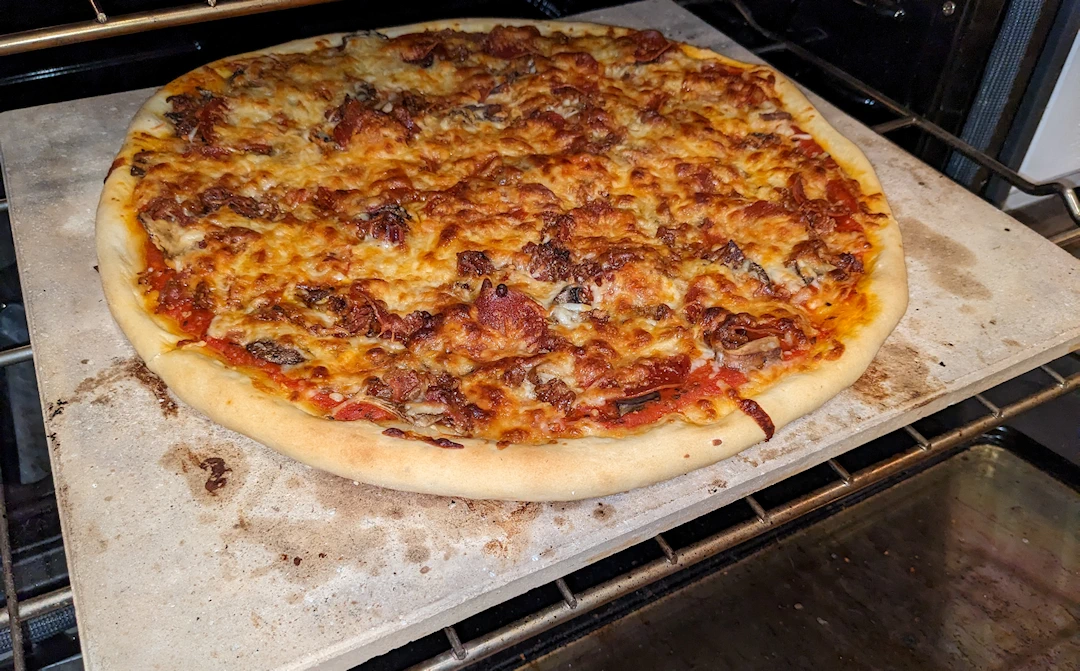
5 Pizza Stone Substitutes
Let’s explore some options to get your pizza that pizza stone experience without actually using one.
Pizza Stone Alternatives Using Common Kitchen Items
1) Cast Iron Pan
This one is just as easily a pizza pan as it is a good substitute for a pizza stone. The direct heat from the cast iron pan will give your pizza bottom lots of opportunity to get well baked. The biggest difference between a pizza stone and pizza pan experience will be if you oil the pan. Adding oil will give it a more crispy “pan-style” bottom.
While there are other ways to make pizza in a cast iron, the most iconic is of course the Chicago Deep Dish – and we think this cast iron pan recipe is the way to go!

But if you’re really trying to get the true pizza stone experience from a cast iron – it can be done. It is tricky…
Start by preheating the pan and then put your pizza in it. This is tricky and a little scary. Before preheating, check to see if your frying pan can sit perfectly flat upside down. If it can, you can cook your pizza on the upside down pan and not have to deal with the hot edges.
While preheating your frying pan, stretch your dough (make sure it’s smaller than the pan!). Doing this on a piece of parchment paper could make it easier to get onto the cast iron pan. You can even top it now too, but you’ll need four hands to transfer it to the cast iron.
After preheating, place the cast iron pan on something sturdy and safe while you’re working. Ideally, a baking sheet on top of a big cutting board.
Put in your dough, quickly top it, and get it back in the oven. Depending on the recipe, the pizza will probably finish cooking in 10-12 minutes (because the crust got a head start on the counter).
2) Cookie Sheet / Baking Sheet
A pan can be used for more than making a “pan pizza”.
A baking sheet or a cookie sheet can also make for a decent pizza stone substitute. Again, the trick is to preheat the sheet in the oven before putting the pizza on it.
Better yet, try a recipe specifically designed for a baking sheet – like a Grandma pizza!

With a baking sheet, you can again remove it and get the pizza onto the sheet on a safe working surface or you can use parchment paper to place the dressed pizza onto it right at the oven. There are pros and cons – transferring the dressed pizza in front of the oven door usually takes two people, working where it’s very hot, and will also allow a lot of heat to escape from the oven. If you take the pan out, the oven stays hot, but the pan will cool pretty quickly. I still think working with the pizza pan outside of the oven is safer and less stressful, so that’s the way I recommend.
Just be sure to have a stable and heat resistant surface to work on!
3) The Pizza Pan

The pizza pan is definitely the more convenient option – they do not require preheating (although you can) and you can get your pizza into the oven much more easily. Pans can also be much larger (for example, you can use a baking sheet) than pizza stones generally are.
Another advantage is that a pizza cooked in a pan can have a more toppings (including extra sauce) because it doesn’t need to be transferred.
Although you can buy perforated pans (we use this one) and oil the pan, the middle of the crust of a pizza cooked in a pan is not going to get quite as crispy as it would on a pizza stone.
Other Pizza Stone Alternatives
4) Outdoor Grill
The intent of using a pizza stone is so that the crust gets more direct heat from the bottom than the circulating hot air cooking the top. An outdoor grill might not have a continuous surface for your pizza to rest on, but it can get very hot – much hotter than your indoor oven – and that will contribute nicely to your pizza crust.
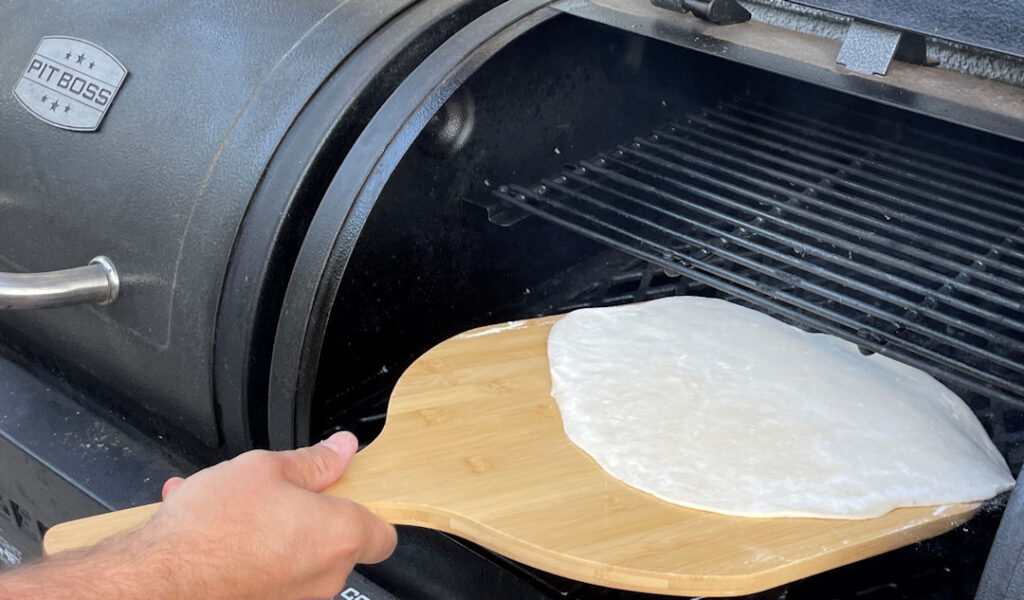
There are two key “tricks” to getting a grilled pizza right:
- Preheat the grill to above 500 degrees Fahrenheit
- Spray some non-stick oil on the grill so the dough doesn’t stick
- Turn down the grill to low as soon as the dough is on
- QUICKLY add the toppings to the pizza after it’s on the grill (this means having everything ready first)
- Close the lid and turn the grill up to medium for 2 minutes. If the grill goes above 400, turn it down.
- Open the lid and check the bottom – if it’s not sticking, turn and move the pizza on the grill to get more even cooking.
- Close the lid
- For the next 10 minutes, monitor the temperature to keep it around 400, avoid flare ups (most likely caused by cheese running off the top), and rotate periodically.
- Check the bottom again. If the top is done and the bottom is not, rotate the pizza again, close the lid, and turn off the grill. Let it rest for 5 more minutes allowing the residual heat to continue cooking the bottom.
We really enjoyed using Urban Slicer’s Outdoor Grilling Pizza Dough, which we thought came out beautifully for this application.
5) Cooking on a Griddle
If you have a large griddle like a Blackstone Griddle, you’ve got an excellent pizza stone substitute! The hot cooking surface provides what your pizza needs to crisp up the bottom! Preheat the griddle to 400 degrees Fahrenheit (you probably need a thermometer to verify the temperature of the surface, and an infrared thermometer is probably best if you have one).
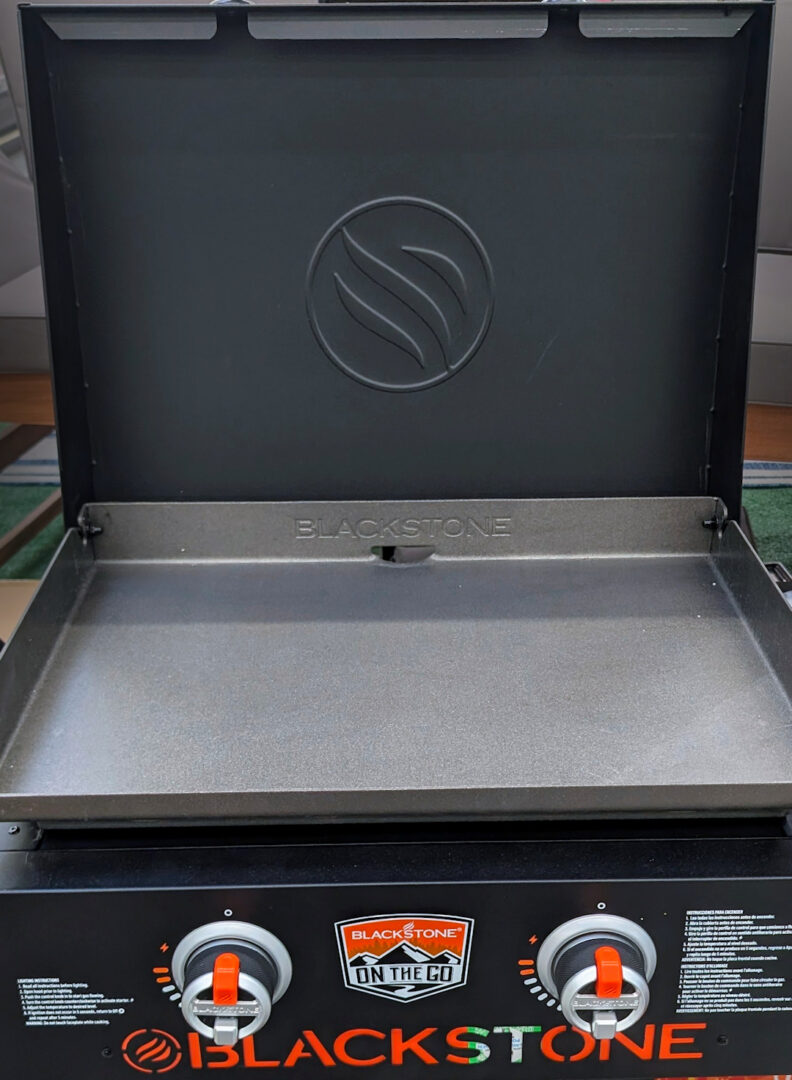
To avoid the risk of parchment paper burning, you should avoid using it.
Instead, like the outdoor grill, put the dough on the griddle and add the toppings while on the griddle. Unless you’re pretty skilled, you should probably cook both sides of the dough a little before adding the toppings, so it’s easier to work with. A fun part of this is to heat some of your toppings on the griddle first. Pre-cooking pepperoni, sausage, mushrooms, peppers, etc. can add a really fantastic flair to your pizza!
6) Make Your Own Pizza Stone
A pizza stone isn’t that unique and something you can “make” yourself.
Okay, we’re not going to have you really make a slab of tile!
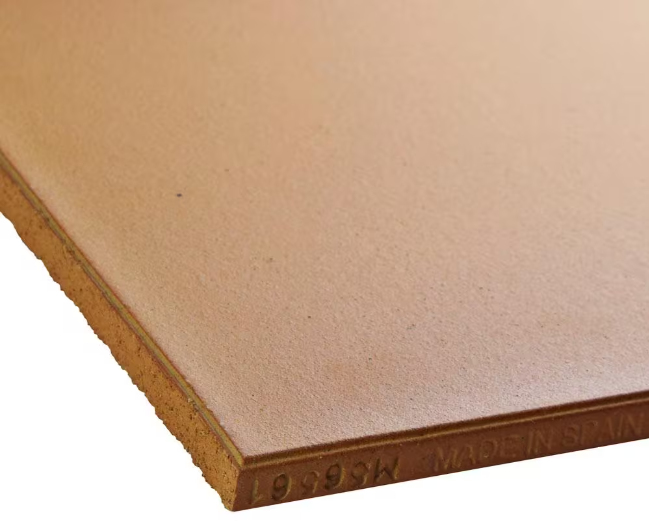
But you can buy unglazed quarry tile at Home Depot and other do-it-yourself stores. Be sure that the tile is not glazed, is big enough for your pizza of choice and also fits in your oven (the ones at Home Depot are just shy of 13″ x 13″ and according to Merola, made of all natural materials, and rated to 2,000 degrees Fahrenheit). Wash it thoroughly with baking soda and water but without soap and let dry for several hours. Next bake it for 30 minutes at 500 degrees before using it the first time.
How Did Your Pizza Stone Alternative Work?
Write a comment and let us know! We’re always interested to hear how your experiences worked out!
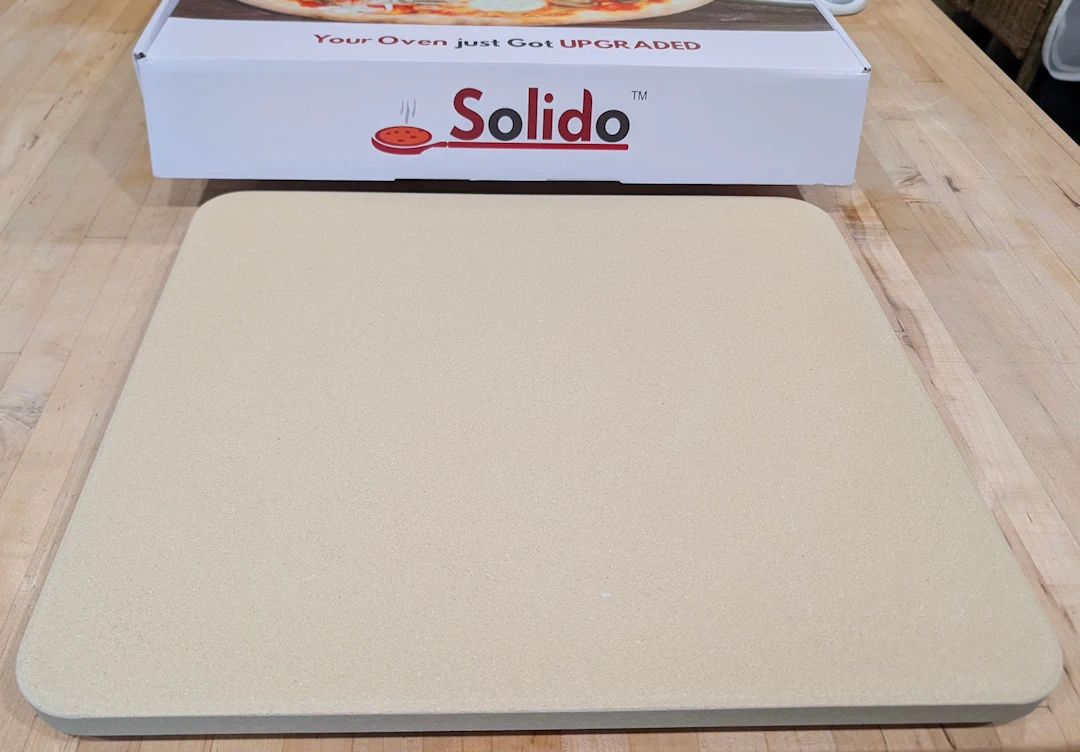
And if you’re ready to get one of your own, we have been using this pizza stone for over 10 years and it’s never left the oven except to clean it…
…and then Todd dropped it…
…so we’re now on our second!


Todd’s cooking skills have revolved around the grill since about age 12, when he developed a love for grilling and took over for Mom at the BBQ. He worked at Wendy’s and at Earl’s Tin Palace (a restaurant chain in Canada) but never really did any sort of baking…until he and Heather started making pizza together! Now he’s often making dough in the mornings and pizza in the evenings.